Concept
Mahlzeit is an interactive social app concept developed during the COVID-19 pandemic in response to social distancing regulations. The project explored how students—particularly those living in university dormitories—could maintain meaningful social connections despite physical isolation.
The idea was rooted in the understanding that shared meals are powerful bonding rituals. Observing the growing popularity of mukbang culture—where individuals eat in front of a virtual audience to create a sense of companionship—reinforced the insight that connection around food can exist even in digital spaces. Mahlzeit sought to translate this phenomenon into an interactive, student-focused platform that enabled structured virtual dining and shared cooking experiences.
Have a Mahlzeit together
Research
Research was conducted through online surveys to better understand students’ social habits, emotional well-being, and challenges during lockdown. Findings highlighted a strong sense of isolation, particularly among international students and first-year residents living away from home for the first time. The research reinforced the idea that shared rituals—such as cooking and eating together—play a significant role in fostering connection and belonging.
Experience Goals
The primary goal of Mahlzeit was to facilitate authentic social interaction in a safe, accessible digital environment. The app aimed to transform cooking and dining into shared online experiences, enabling students to connect through virtual meals, collaborative cooking sessions, and cultural exchange. It was designed to feel welcoming, community-driven, and emotionally supportive during a time of uncertainty.
Inspiration
The app drew inspiration from both dating platforms and social media apps, combining profile-based matching with community interaction. At the same time, it integrated features of informational platforms by offering recipes and the possibility of shared cooking classes.
Our personal experiences during the pandemic—particularly feelings of isolation as international students—strongly influenced the direction of the project. Cooking emerged as both a cultural bridge and a ritual that fostered comfort, independence, and connection. Moreover the experience of cooking and eating together was something that proved to work well in both a one on one environment as well as a group setting.
Development
The project was developed by a team of five international students at HSRW, working collaboratively throughout the entire design process. Using digital collaboration tools such as Miro, we collectively refined our concept, mapped user journeys, and structured the app’s core features. The process was iterative and research-informed, allowing us to continuously align the concept with user needs.
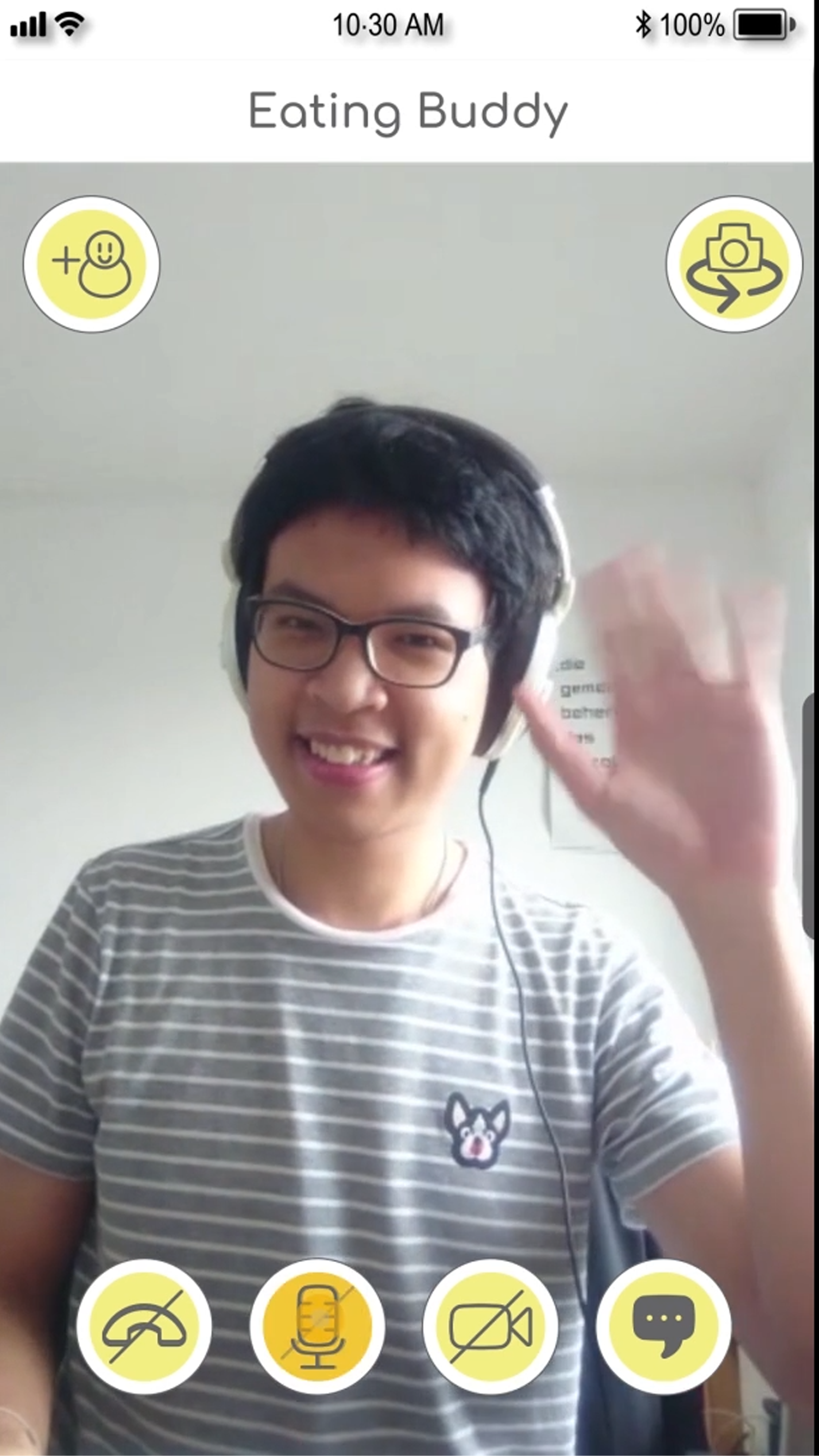
The decision to develop Mahlzeit as a mobile app was intentional. An app format ensured accessibility for all students across campus while allowing the device to be easily carried and repositioned—an important factor for capturing and sharing the cooking process in real time. Additionally, the mobile interface allowed us to draw from interaction patterns familiar to students through dating and social media platforms, making the experience intuitive and immediately relatable.
We translated our ideas into paper prototypes to test interaction flows and identify potential areas of confusion within the UX design. These low-fidelity prototypes helped us refine navigation, clarify user pathways, and improve overall usability before moving toward more polished iterations.
For the final teaser video, responsibilities were divided within the team. I was responsible for video editing, animation, and contributing several of the visual illustrations, ensuring the concept was communicated clearly and cohesively.
Final Thoughts
For our team, Mahlzeit became more than a design concept—it was a formative learning experience in both UX and UI design. The project challenged us to respond creatively to an unforeseen global situation and to develop innovative solutions aimed at maintaining social cohesion during a time of physical separation. It reinforced our belief that design can actively address current issues and serve as a tool to bring people together.
The process was also an exercise in collaboration. As part of the team was living internationally due to travel restrictions, we relied on many of the same remote tools and digital communication methods that our app sought to explore. In this sense, the way we worked mirrored the very problem we were trying to solve.
Fittingly, the project achieved for us what it was designed to facilitate for others: connection. Despite having never met in person at the beginning of the project, we formed a strong sense of community and shared purpose. Mahlzeit not only explored digital socialization—it fostered it within our own team.